
Research and lab records
Compound and SAR tables, R-group enumeration, notebook entries, compound registration, literature search, procedures and Python scripts.
Start here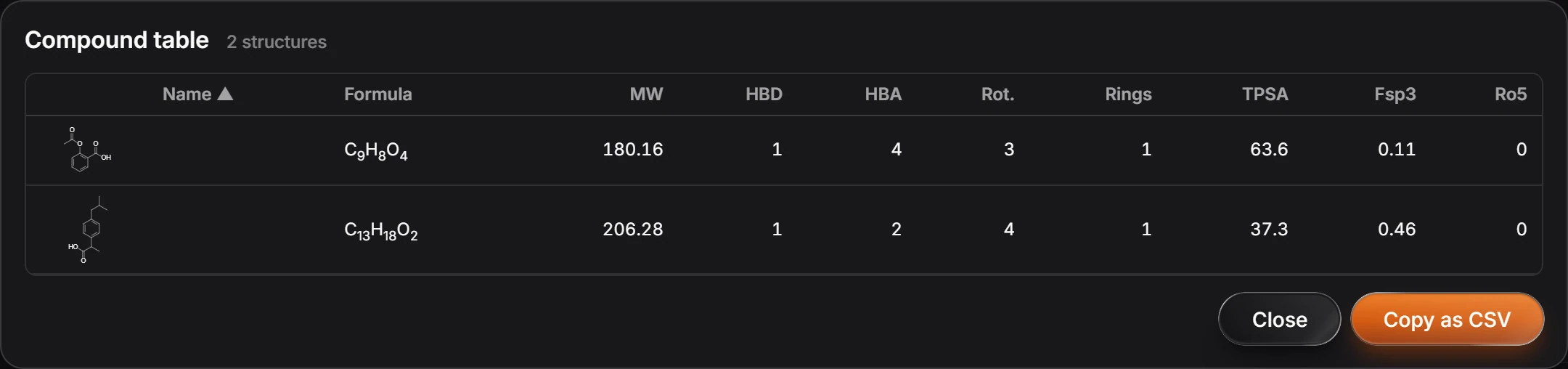
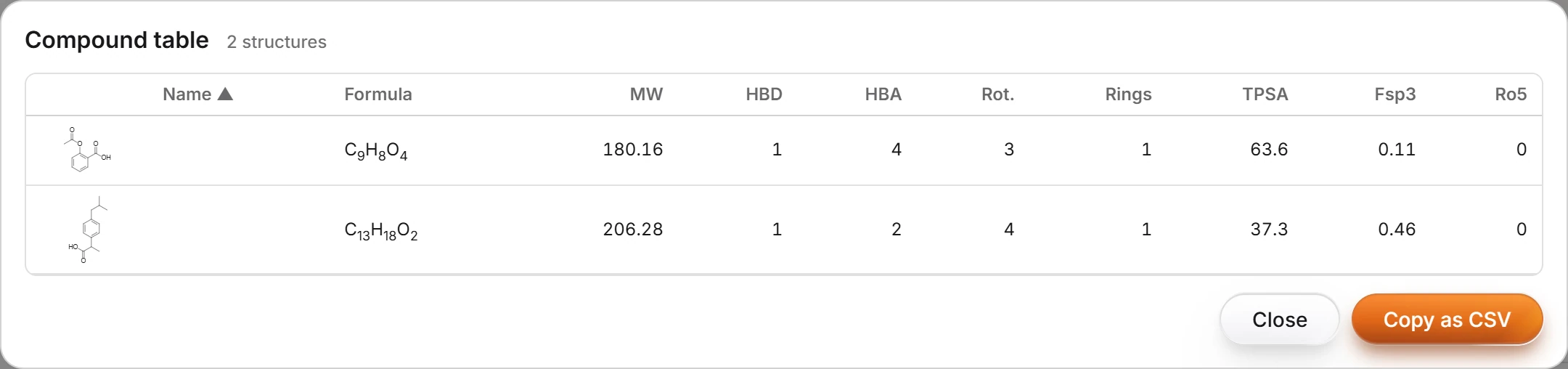 1 · How-toHow to make a compound tableChoose View › Compound table. Every structure is a row with its formula, MW, HBD, HBA, rotatable bonds, rings, TPSA, Fsp3 and Rule of five violations. Copy as CSV copies it.
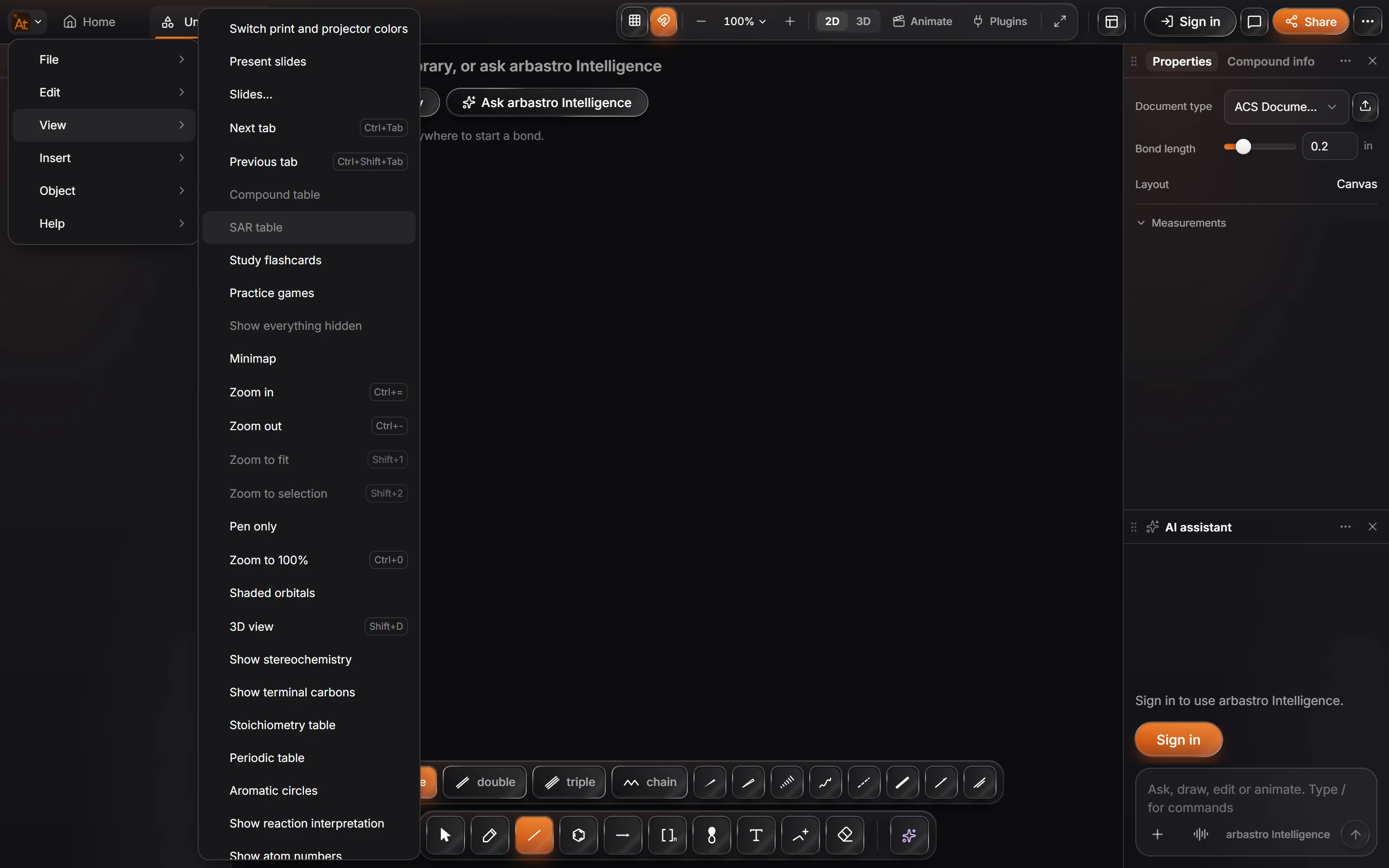
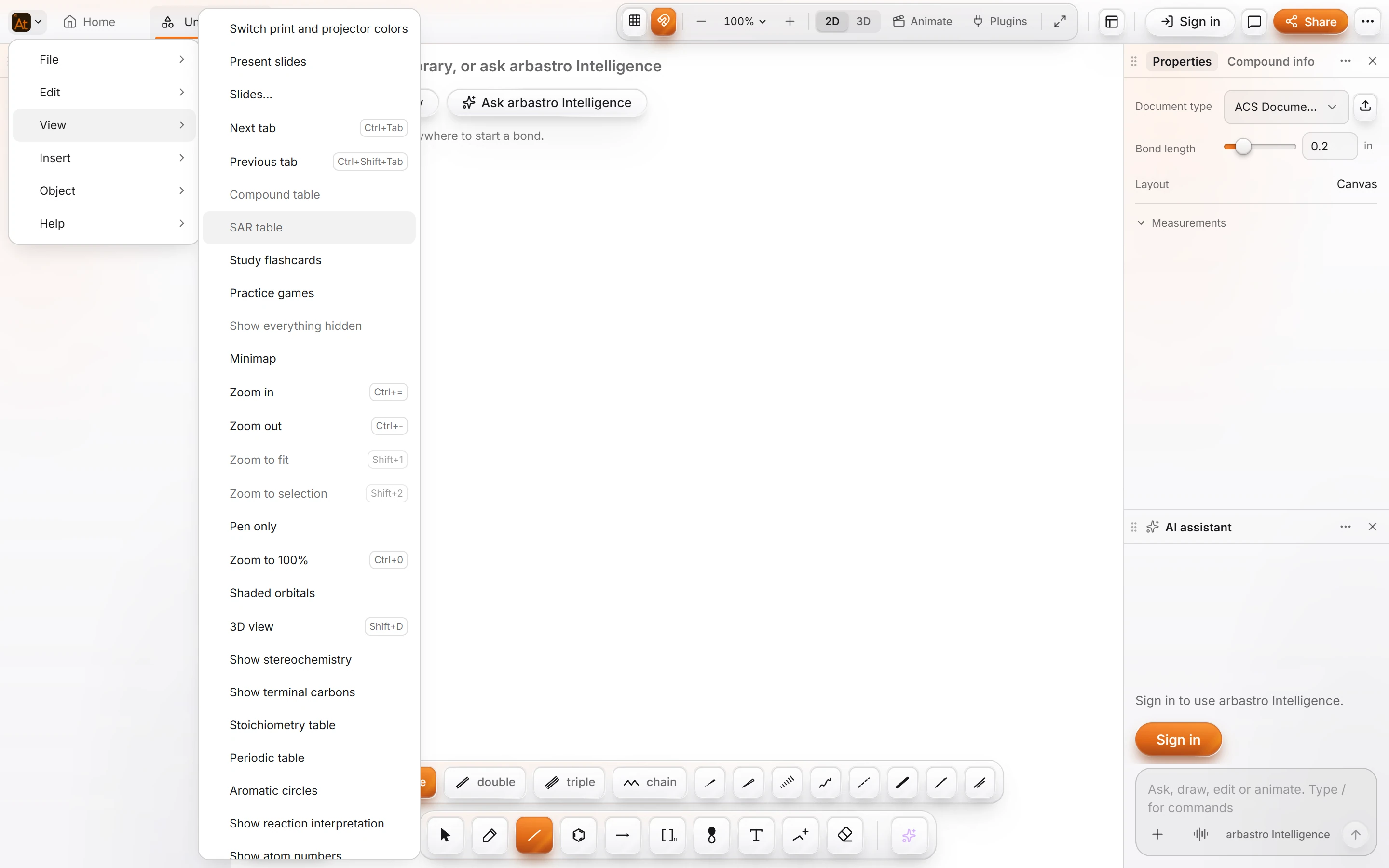 2 · How-toHow to make an SAR tableDraw the core with R1, R2 and so on as atom labels, then choose View › SAR table. The compounds are the other structures on the page, or a pasted table with a SMILES column.
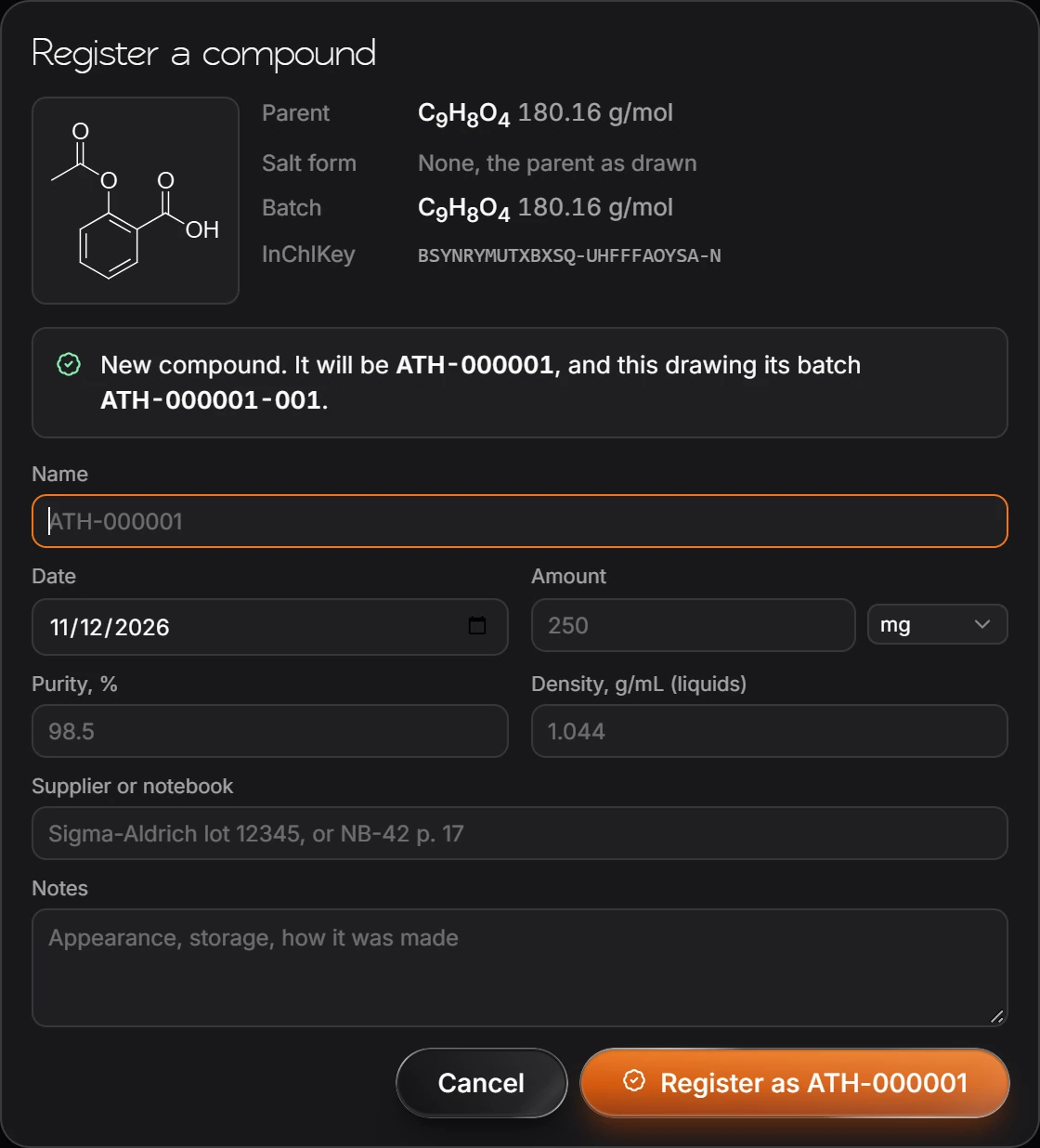
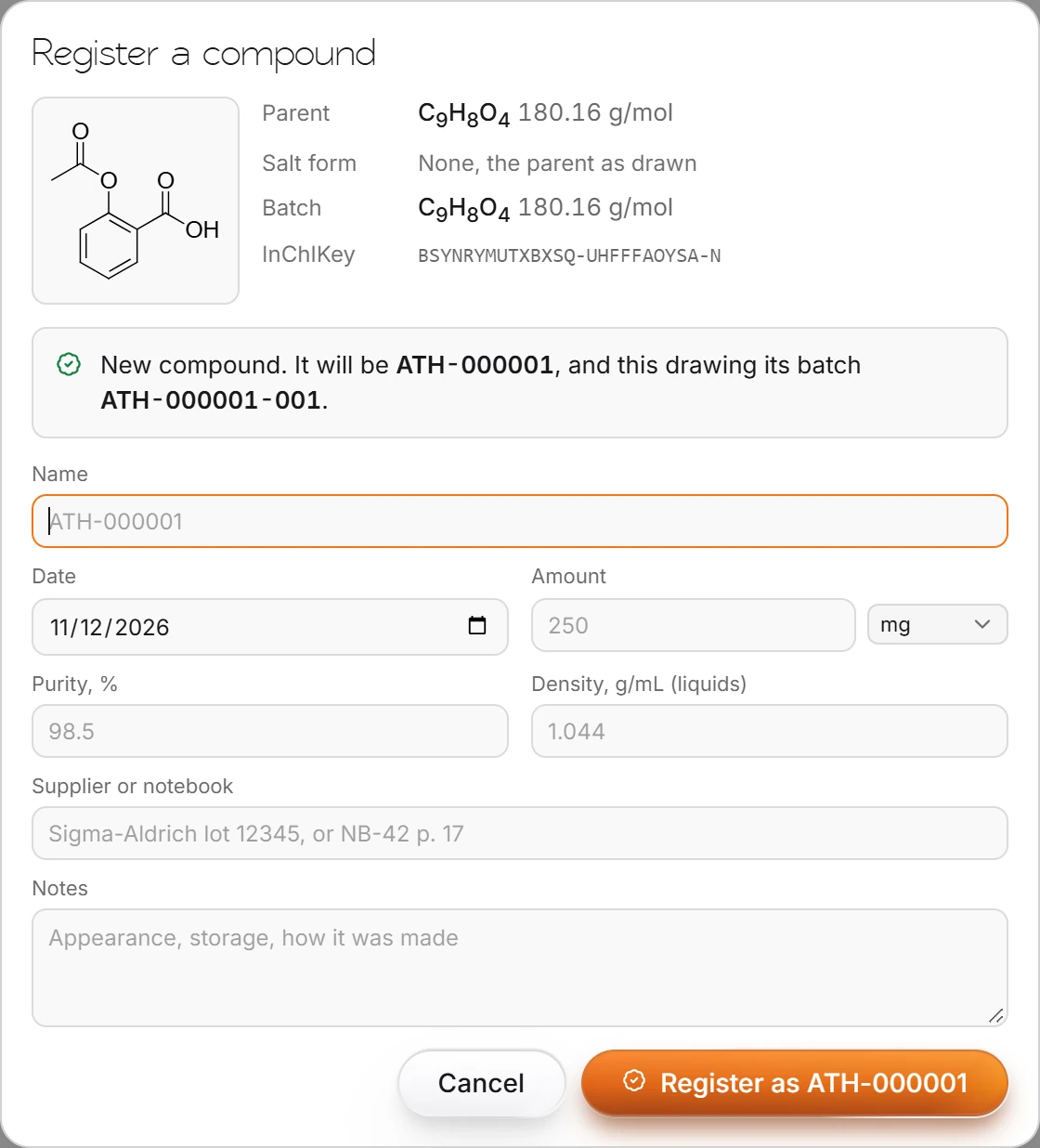 3 · How-toHow to register a compound and its batchesSelect the structure and choose Object › Chemistry › Register compound. A new compound gets an ID such as ATH-000001 and this drawing becomes its batch ATH-000001-001.
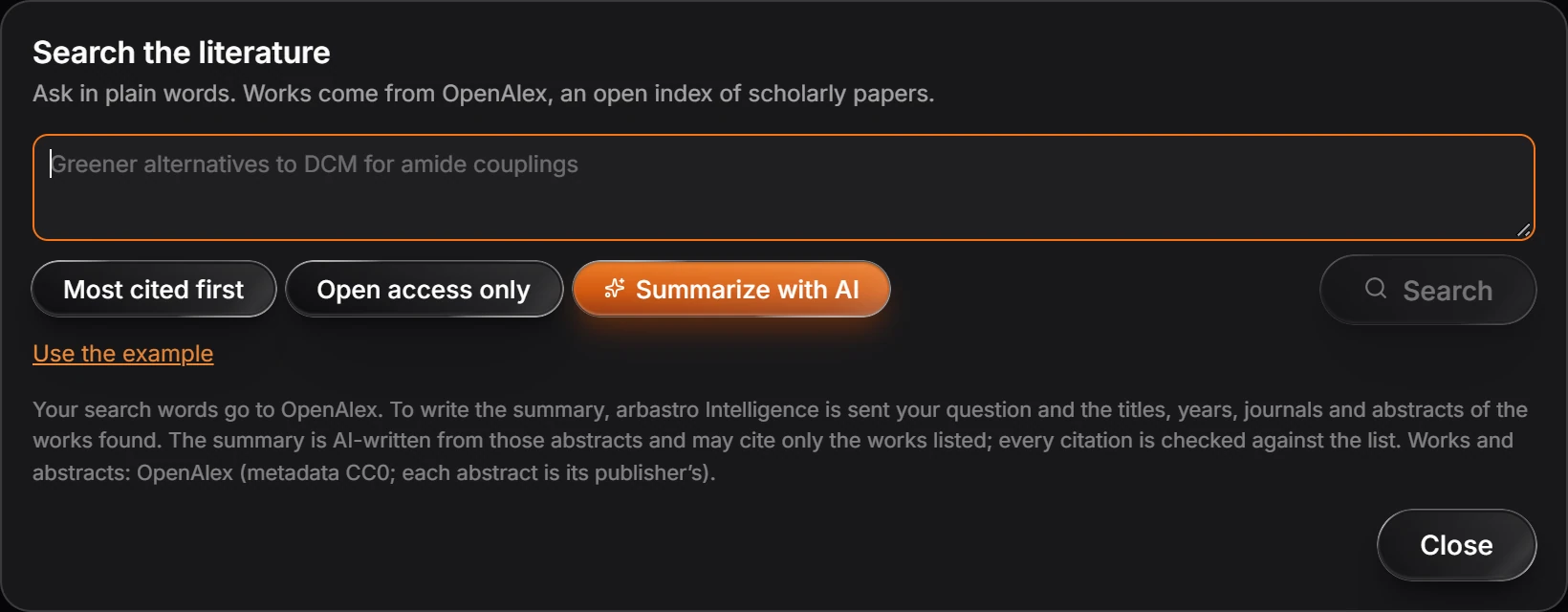
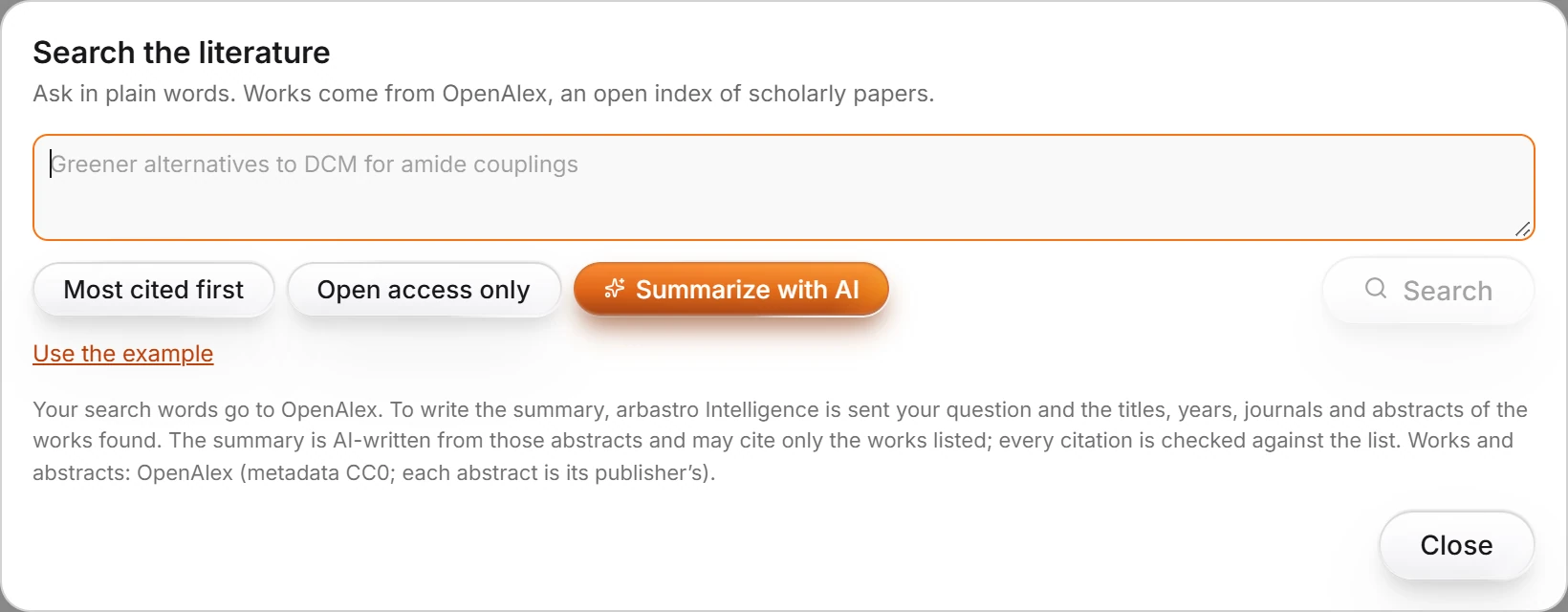 4 · How-toHow to search the literatureChoose File › Search the literature, ask in plain words and press Search. Works come from OpenAlex; Most cited first and Open access only narrow them, and Summarize with AI writes a cited summary.
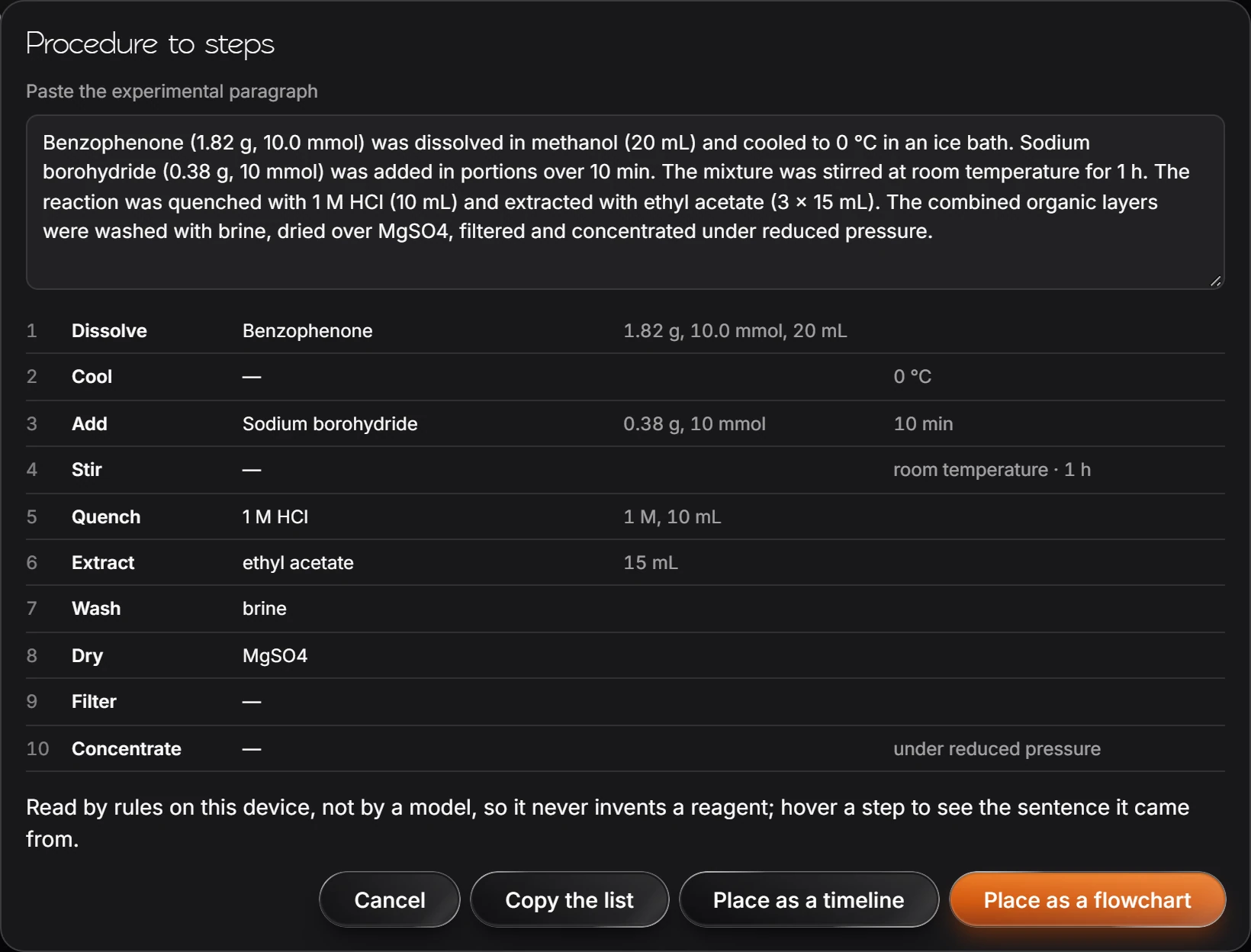
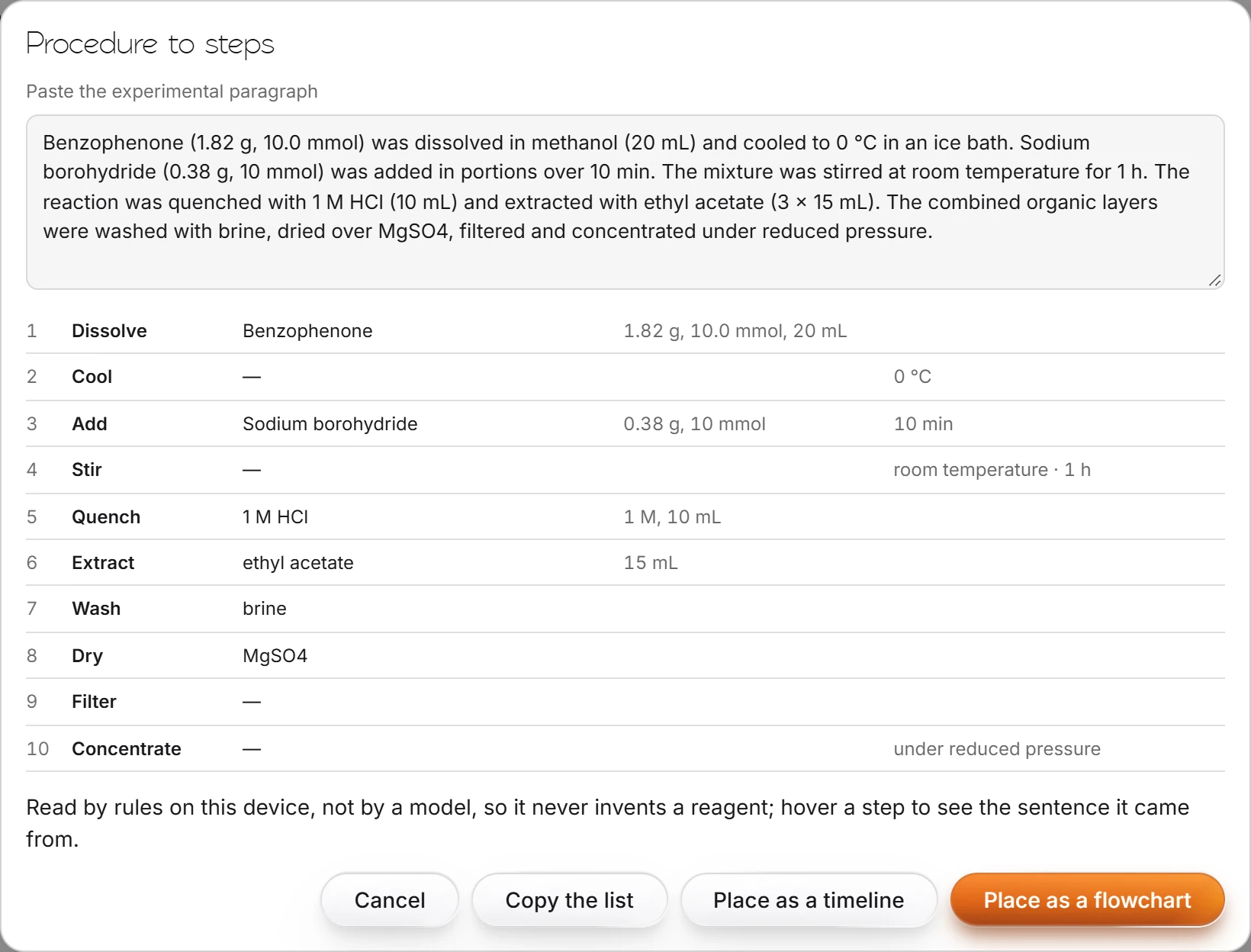 5 · How-toHow to turn a procedure into stepsChoose Insert › Procedure to steps and paste the experimental paragraph. Each step is listed with its action, reagent, amounts and conditions; place it as a timeline or a flowchart.
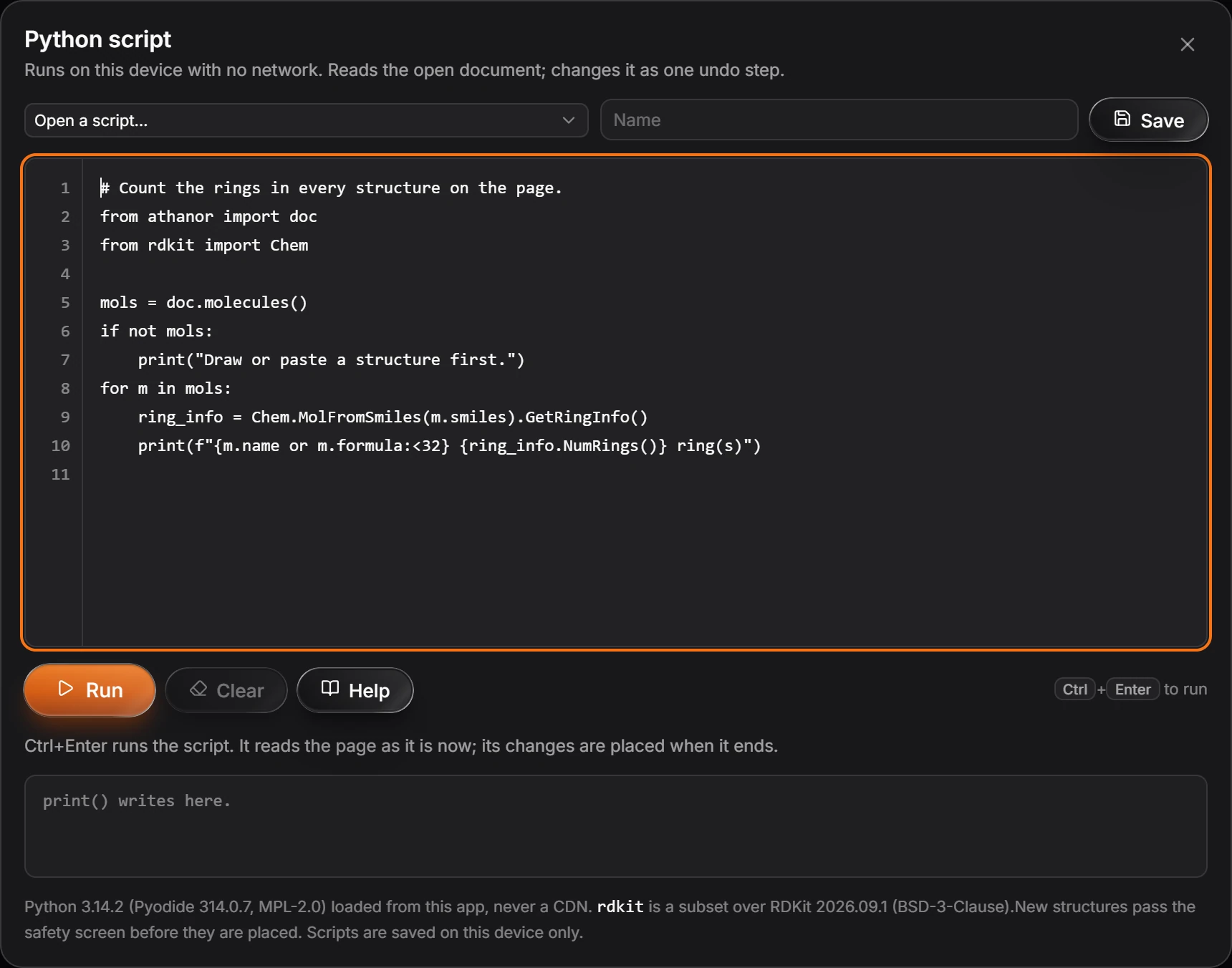
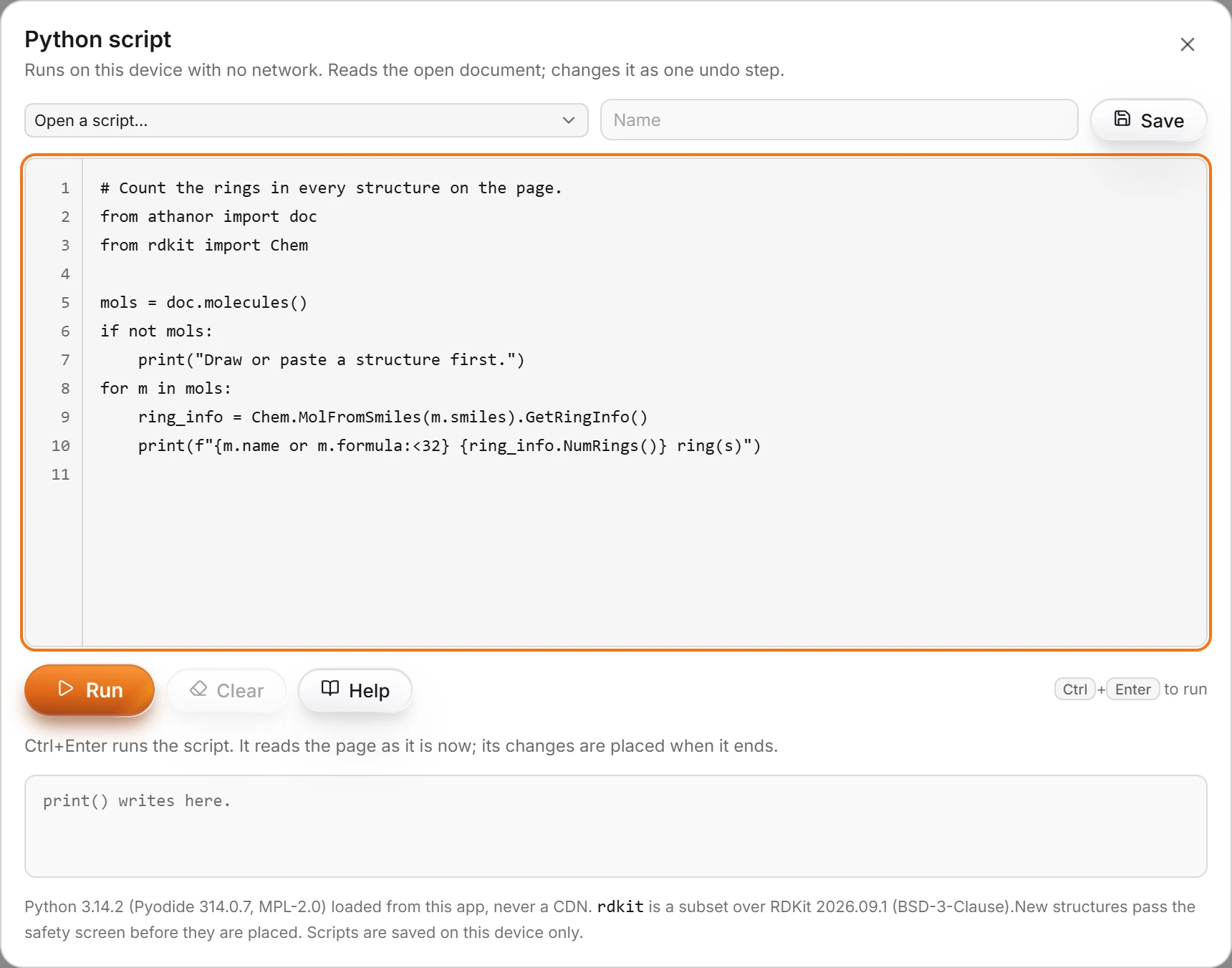 6 · How-toHow to run Python scripts with RDKitChoose Insert › Run a Python script, write or open a script, and press Run (Ctrl+Enter). It reads the page through athanor.doc and rdkit, prints below, and places its changes as one undo step.
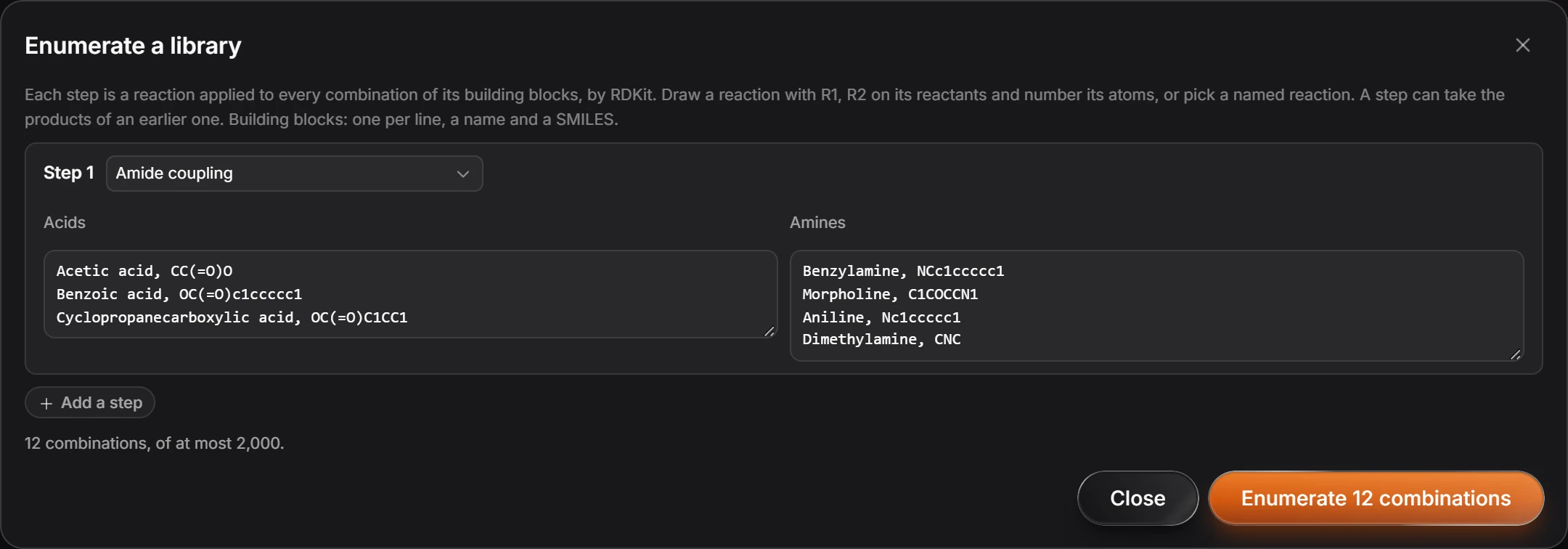
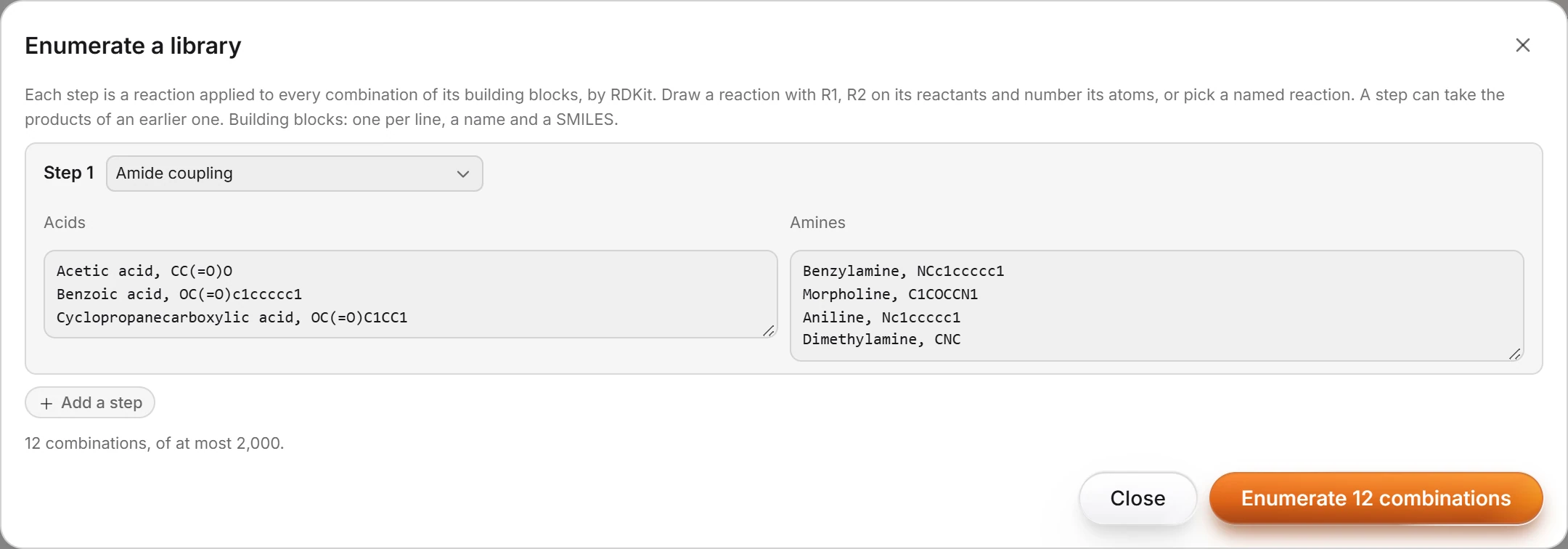 7 · How-toHow to enumerate a compound libraryChoose Insert › Enumerate a library, pick a named reaction such as Amide coupling or draw one, list the building blocks one per line as a name and SMILES, and press Enumerate.
- Still stuck? Read the FAQ or contact support.
- Something wrong on this page? Tell us.
- For AI tools: llms.txt