
For students and researchers
A reaction product predictor in your chemistry editor
Draw the reactants and a reaction arrow, and Athanor’s Productum I model proposes the product, right on the canvas. It needs a free arbastro account and never uses AI credits.
How it does on textbook reactions
14 reactions from undergraduate labs, sent as reactants and reagents. It gave the textbook product as its first answer 12 times. The misses are shown as misses.
Fischer esterification: ethanol + acetic acid

 H2SO4

The textbook product, as its first answer, at 96% confidence.
Fischer esterification: isoamyl alcohol + acetic acid
 H2SO4
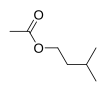
The textbook product, as its first answer, at 99.7% confidence.
Aspirin: salicylic acid + acetic anhydride

 H3PO4
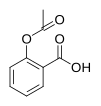
The textbook product, as its first answer, at 98% confidence.
Aldol condensation: benzaldehyde + acetone to dibenzalacetone

 NaOH, ethanol
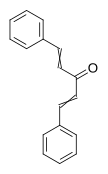
The textbook product, as its first answer, at 85% confidence.
Grignard: phenylmagnesium bromide + benzophenone

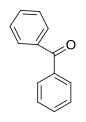 ether
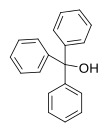
The textbook product, as its first answer, at 97% confidence.
Grignard: phenylmagnesium bromide + carbon dioxide
 ether

The textbook product, as its first answer, at 51% confidence.
Wittig: benzaldehyde + benzyltriphenylphosphonium chloride to stilbene
(c1ccccc1)c1ccccc1](/rxn/6771f1ff49d2.svg) NaOH, CH2Cl2
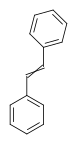
The textbook product, as its first answer, at 89% confidence.
E1 dehydration of cyclohexanol
 H3PO4
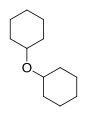
Missed. Its first answer is dicyclohexyl ether, the side product; cyclohexene, the textbook answer, is its third. First answer at 60%.
SN2: 1-butanol + HBr

 H2SO4

The textbook product, as its first answer, at 50% confidence.
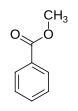
Nitration of methyl benzoate
O](/rxn/b070074c57dc.svg) H2SO4
[O-])c1](/rxn/4932197d637e.svg)
The textbook product, as its first answer, at 89% confidence.
Reduction: camphor + NaBH4

 methanol

The textbook product, as its first answer, at 94% confidence.
Diels-Alder: anthracene + maleic anhydride
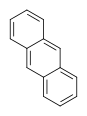
 xylene
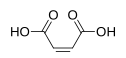
Missed. Its first answer is maleic acid, the anhydride opened by water; the Diels-Alder adduct is not in its top three. First answer at 69%.
Acetanilide: aniline + acetic anhydride

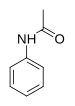
The textbook product, as its first answer, at 98% confidence.
Benzocaine: 4-aminobenzoic acid + ethanol
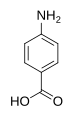 H2SO4
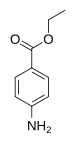
The textbook product, as its first answer, at 99% confidence.
Confidence is the model’s own estimate for that answer among the ones it considered, not a measured chance that the reaction works in your flask. Run on November 9, 2026 with Productum I 1.0. Every structure was screened against chemical weapons and controlled-substance lists before it was published.
Coming from IBM RXN? See the options now that it is offline.