
IBM RXN for Chemistry is offline. Here is what to use now.
IBM took RXN for Chemistry’s hosted app and its API offline on October 28, 2026. It was the best-known free tool for predicting reaction products and planning retrosyntheses.
This page sets out what is left: IBM’s own self-hostable version, MIT’s ASKCOS, AstraZeneca’s AiZynthFinder and Athanor, with Athanor’s results on textbook reactions and common drugs so you can judge it before you sign in.
Windows 10 and 11 Updates itself from the Store
Drawing needs no account. Predictions need a free one.
What happened
The notice IBM posted on its rxn4chemistry GitHub page says RXN for Chemistry reached end of service on October 28, 2026, and that the hosted platform and the programmatic APIs were taken offline that day. It points to a self-hostable version on GitHub, rxn-sandbox, for running forward predictions and retrosyntheses on your own machine.
If you used IBM’s Python wrapper, rxn4chemistry, your code still calls the hosted API, which no longer answers. rxn-sandbox does not offer that API: it runs predictions through its own notebook, scripts and chat interface. Moving means rewriting those calls for rxn-sandbox or for one of the options below.
Your options
IBM rxn-sandbox
IBM’s own models, run on your machine through a notebook, scripts or a chat interface. The closest thing to RXN’s predictions, if you can install it yourself, though not its API. Nothing to sign up for, and nothing leaves your network.
rxn-sandbox on GitHubASKCOS, from MIT
An open-source synthesis planning suite (MIT License) from the Coley group, with a free web app that needs a login to plan routes. Running it yourself needs a strong machine: the docs ask for at least 32 GB of memory.
askcos.mit.eduAiZynthFinder, from AstraZeneca
Open-source retrosynthesis (MIT License) that you install and run yourself, from the command line, its own app or Python. You supply the list of compounds you can buy and the trained model, which its authors publish for download.
AiZynthFinder on GitHubAthanor
A free chemistry editor with its own models: Productum I predicts products as you draw, and Resolvere I plans routes back to compounds you can buy, with the hazards for each. Draw in the browser with no account; predictions and routes need a free one and never use credits.
Open AthanorPaid options include SYNTHIA and the retrosynthesis tools in SciFinder and Reaxys. Athanor’s models are not IBM’s, and its results will differ from what RXN gave you. The examples below are so you can see how they differ before you rely on them.
Product prediction, on textbook reactions
Fourteen reactions from undergraduate labs, sent to Productum I as reactants and reagents. It got twelve right as its first answer. The two it missed are shown as misses.
Fischer esterification: ethanol + acetic acid

 H2SO4

The textbook product, as its first answer, at 96% confidence.
Fischer esterification: isoamyl alcohol + acetic acid
 H2SO4
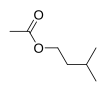
The textbook product, as its first answer, at 99.7% confidence.
Aspirin: salicylic acid + acetic anhydride

 H3PO4
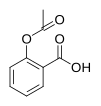
The textbook product, as its first answer, at 98% confidence.
Aldol condensation: benzaldehyde + acetone to dibenzalacetone

 NaOH, ethanol
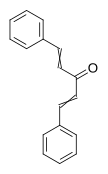
The textbook product, as its first answer, at 85% confidence.
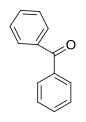
Grignard: phenylmagnesium bromide + benzophenone

 ether
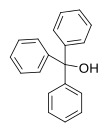
The textbook product, as its first answer, at 97% confidence.
Grignard: phenylmagnesium bromide + carbon dioxide
 ether

The textbook product, as its first answer, at 51% confidence.
Wittig: benzaldehyde + benzyltriphenylphosphonium chloride to stilbene
(c1ccccc1)c1ccccc1](/rxn/6771f1ff49d2.svg) NaOH, CH2Cl2
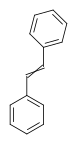
The textbook product, as its first answer, at 89% confidence.
E1 dehydration of cyclohexanol
 H3PO4
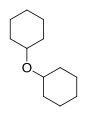
Missed. Its first answer is dicyclohexyl ether, the side product; cyclohexene, the textbook answer, is its third. First answer at 60%.
SN2: 1-butanol + HBr

 H2SO4

The textbook product, as its first answer, at 50% confidence.
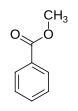
Nitration of methyl benzoate
O](/rxn/b070074c57dc.svg) H2SO4
[O-])c1](/rxn/4932197d637e.svg)
The textbook product, as its first answer, at 89% confidence.
Reduction: camphor + NaBH4

 methanol

The textbook product, as its first answer, at 94% confidence.
Diels-Alder: anthracene + maleic anhydride
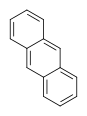
 xylene
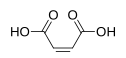
Missed. Its first answer is maleic acid, the anhydride opened by water; the Diels-Alder adduct is not in its top three. First answer at 69%.
Acetanilide: aniline + acetic anhydride

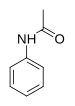
The textbook product, as its first answer, at 98% confidence.
Benzocaine: 4-aminobenzoic acid + ethanol
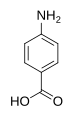 H2SO4
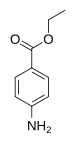
The textbook product, as its first answer, at 99% confidence.
Retrosynthesis, on common drugs
Each of these drugs can simply be bought, so the search’s first answer is “buy it”. Shown here is its second: the first route that makes the drug, from compounds in stock.
paracetamol
1 step · score 0.67
- in stock
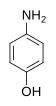 in stockAmide coupling
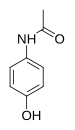
Step confidence 67%
lidocaine
1 step · score 0.78
 in stock
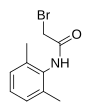 in stockN-alkylation
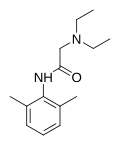
Step confidence 78%
atenolol
1 step · score 0.85
 in stock
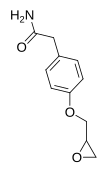 in stock
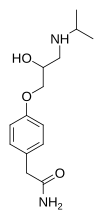
Step confidence 85%
propranolol
1 step · score 0.94
- in stock
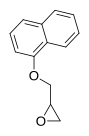 in stock
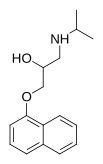
Step confidence 94%
omeprazole
2 steps · score 0.94
Step 1
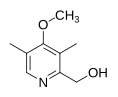 in stock
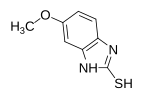 in stock
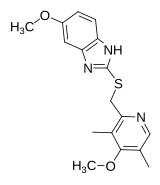
Step confidence 99.9%
Step 2
in stock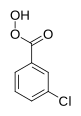 in stock
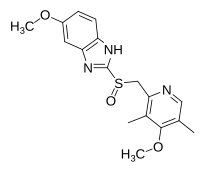
Step confidence 94%
sildenafil
4 steps · score 0.38
Step 1
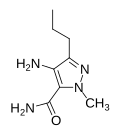 in stock
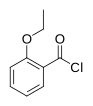 in stockAmide coupling
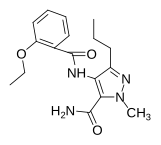
Step confidence 69%
Step 2
in stock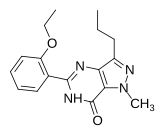
Step confidence 86%
Step 3
in stock in stock
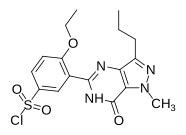
Step confidence 86%
Step 4
in stock in stockSulfonamide formation
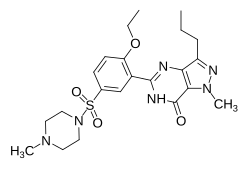
Step confidence 74%
How to read these numbers
A product’s confidence is the model’s own estimate for that answer among the ones it considered. A step’s confidence is Resolvere’s for that disconnection, and a route’s score combines its steps. None of them is a measured chance that the reaction works in your flask; treat a prediction as a suggestion to check. The search was asked to go back past compounds that are sold, so an intermediate can be marked in stock and still be made in an earlier step.
Run on November 9, 2026 with Productum I 1.0 and Resolvere I 1.1 (search 1.1.0). Every structure on this page was screened against chemical weapons and controlled-substance lists before it was published.
Sources